Rapid Reharm Reference by Chris Cadenhead
Rapid Reharm Reference by Chris Cadenhead
Rapid Reharm Reference · Second Edition
Find new changes for the songs you already play.
Move beyond the same familiar chord choices. Learn five ways to find a new sound, then work through the musical decisions that make it fit.

Hear where one bar can go.
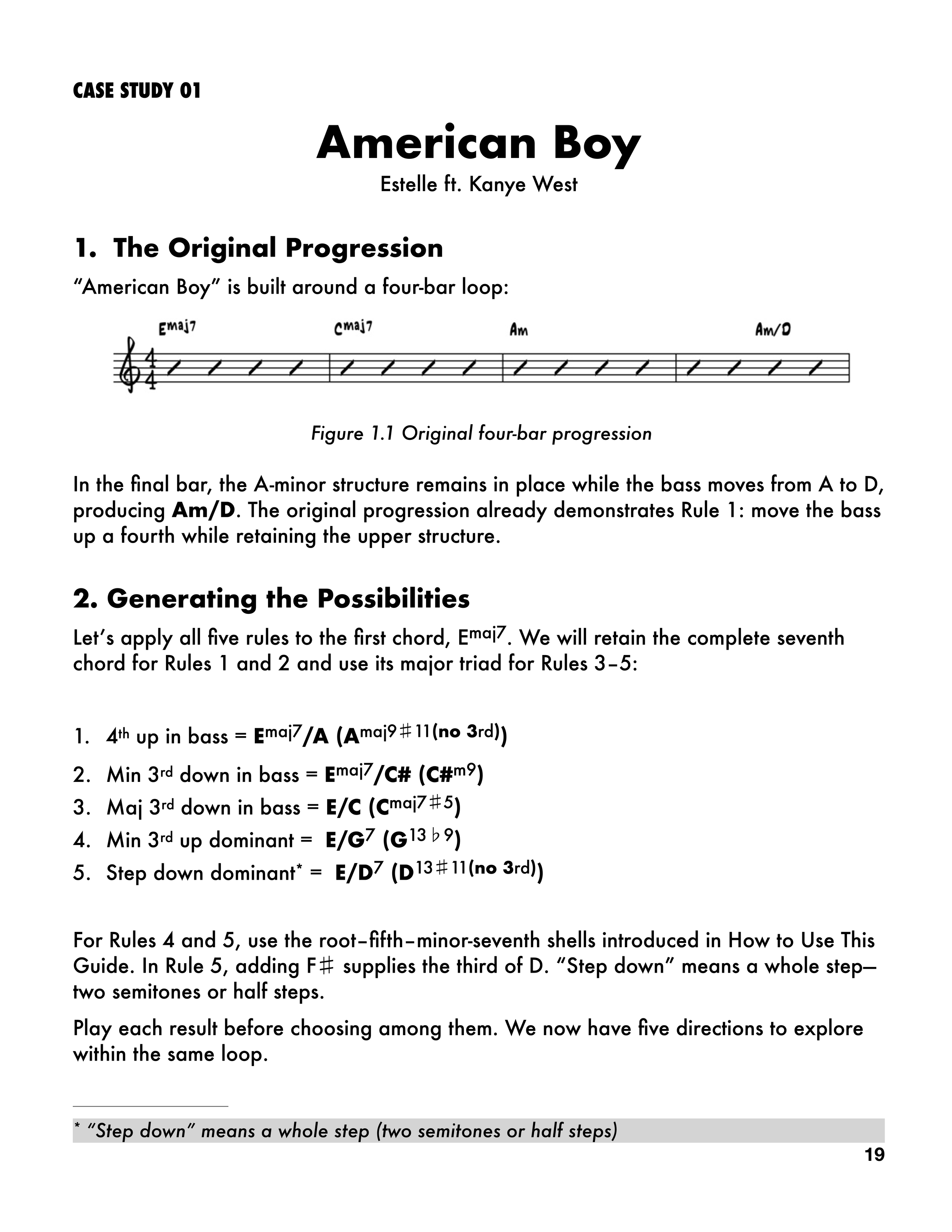
Play the original “American Boy” progression. Then hear a reharm of bar 1, with C♯m9 on beat 3 and G13♭9 on beat 4.

Figure 1.1 · Original four-bar progression
$37 · Interactive EPUB + printable PDF
You can hear a reharm you love.
How do you find one of your own?
You know your chords. You can follow someone else’s changes. But when it’s your turn to take a familiar song somewhere new, it’s easy to reach for the sounds you already use.
When I was studying music in Miami, Dr. Alfred Pinkston introduced me to an idea that changed how I heard harmony: the same melody note could become the root, third, seventh, or a tension, depending on the chord beneath it.
He made it a game. When that note came around again, give it a different role. Keep looking for another sound.
That gave me a way into something that had felt almost limitless. In my own teaching, I’ve also seen how quickly all those possibilities can become overwhelming.
I wrote Rapid Reharm Reference to make that exploration manageable. The Second Edition brings the chord reference together with the method behind it: how to find an option, develop it, and decide where it belongs in a song.
You can take one idea to the keyboard, hear what changes, and try it in music you already know.
Chris CadenheadAuthor, Rapid Reharm Reference
A new chord is a starting point.
The song tells you what to do with it.
The five rules generate possibilities from chords you already know. The case studies then work through the questions that turn those possibilities into an arrangement.
- Generate and complete a sound.Use the five rules to find options, then complete the chord or voicing before deciding where to use it.
- Choose where it happens.A chord on beat 1 does a different job from a chord on beat 4. Rhythm changes the effect.
- Listen to the melody.Hear what the melody note becomes against the new chord: a chord tone, a tension, or a sound you need to reconsider.
- Connect it to the next chord.Work with the harmony before and after it. Decide where you want the music to lead.
Try the five recorded voicing examples
Hear the original E-major triad first, then compare five directions it can take. These are my preferred voicings for each substitution—the professional choices you’re getting from a Grammy-nominated pianist.
Play E major first, then try a substitution.
$37 · PDF + interactive EPUB
Something to study.
Something to keep on the stand.
The original chord charts are still here. The new edition shows how to use them, with worked songs, voicings, and recordings you can play as you read.
- Five reharmonization rules. Practical starting moves for finding another harmonic direction.
- Ten song case studies. Follow original changes and reharmonized passages, including “American Boy,” “What You Won’t Do for Love,” and “The Girl from Ipanema.”
- Bass movement and voicings. Develop the sound beyond a new chord symbol, and connect it to the music around it.
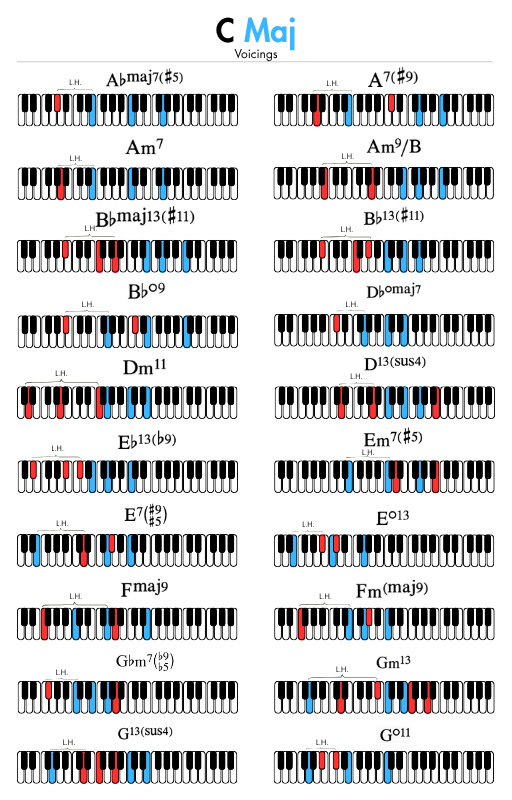
- Chris’s preferred piano voicings. Professional voicings for each substitution, chosen by a Grammy-nominated pianist and shown in keyboard diagrams and notation.
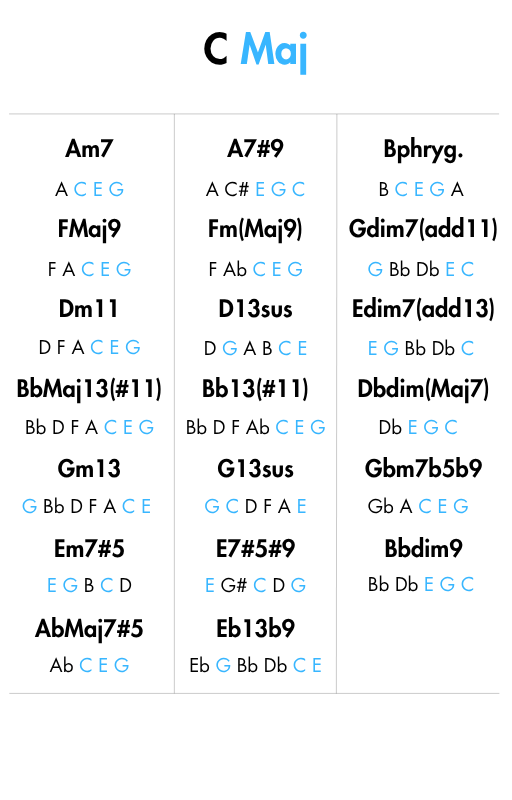
- A reference in all 12 keys. Twenty alternatives for each major triad and eight for each minor triad, with notation and keyboard diagrams.
- The same audio in every format. Tap chords, voicings, and case study figures in the EPUB, or scan the QR code included in the digital and print books to hear the same examples on the audio companion page.
- The printable PDF. Keep it open beside the keyboard, print the pages you’re working on, and make your own notes.
Bring a song you already play.
This book is written for keyboard players who know basic chords and want more choices when arranging, accompanying, or performing.
- You want a practical way to begin a reharm.
- You want to understand the decisions behind a sound you like.
- You want a reference you can return to when you need another option.
You’ll get the most from it if you’re comfortable with major and minor triads, basic seventh chords, and working through keyboard examples. If those are still new, build that foundation first.
“I have purchased your reharm resource and its EXACTLY what I have been looking for to aid the process.”
First Edition reader · Published on ChrisCadenhead.com

From the keyboard to the page.
Chris Cadenhead is a Grammy-nominated pianist, vocalist, producer, and teacher. He has performed with Prince, Stevie Wonder, Lalah Hathaway, Leslie Odom Jr., and The Jacksons, and played Fender Rhodes on Terrace Martin’s Grammy-nominated Velvet Portraits.
This book draws from his teaching and performing, giving you small musical ideas to explore and worked examples that show how he makes decisions.
“The brother is endlessly inspired so he is endlessly inspiring. He’s taught me so much and I am thankful to know him!”More about Chris →
Take the next song somewhere new.
Rapid Reharm Reference
Second Edition
- The method and ten song case studies
- Chord reference in all 12 keys, with Chris’s preferred professional voicings
- Interactive EPUB with recorded examples
- QR access to the same audio for other readers
- Printable PDF
$37One purchase · both digital formats
Download links delivered by email after purchase.
A few practical questions.
What comes with the digital edition?
You receive the Second Edition of Rapid Reharm Reference as an interactive EPUB and a printable PDF, including Chris’s preferred professional voicings and recorded examples. Both digital and print versions include a QR code that takes you to the same audio examples.
How do I play the audio?
In Apple Books on iPhone, iPad, or Mac, tap a chord name, voicing title, or case study figure in the EPUB. If you use another reader or the print edition, scan the QR code in the book. It opens the audio companion page with the same recorded examples, so you can listen in your browser.
What’s different from the First Edition?
The original charts and keyboard diagrams remain in the Chord Reference. This edition adds five reharmonization rules, ten worked song case studies, material on bass lines and voicings, a discussion of musical taste, a glossary, and playable audio.
I already own the First Edition. What do I pay?
The digital upgrade is $19.99. Choose the First Edition owner option in the order window and use the email address from your original purchase.
Do I need advanced theory?
You should know major and minor triads and basic seventh chords, and be able to work through keyboard examples. The book gives you practical starting points, then explains the musical decisions. It’s intended for intermediate keyboard players.
Is there a printed edition?
A spiral-bound edition is planned, with a QR code for the same audio examples included in the EPUB. The offer on this page is the digital package: interactive EPUB plus printable PDF.
How will I receive my files?
Your PDF and EPUB download links arrive by email after checkout. Use an email address you can access, and check your spam or promotions folder if the delivery message doesn’t appear.
P.S. Start with one familiar song and one new chord choice. Play it, listen to what it does, and use the book to explore where you could go next.
$37 · Interactive EPUB + printable PDF
What people are saying
Hi Chris. I try to come at reharm from as many angles as possible. I have purchased your reharm resource and its EXACTLY what I have been looking for to aid the process. I also appreciate you providing the chords visually as well as the music notation. Great work..
…purchased that jawn QUICK! I’ve been looking for reharmonization and stepping outside the scale methods for DECADES. You’re the first that actually explained it in layman’s terms to me.